In India, Special Intensive Revision (SIR) usually refers to a concentrated review or audit process conducted by government authorities, mostly in relation to taxation, accounting, or corporate compliance.
Reviving the 2002 Voter List: Why It Matters in 2025 Text Here
A voter list from over two decades ago is making headlines again in West Bengal. The
Election Commission has launched a Special Intensive Revision (SIR) process based on the
2002 voter list— marking the first such exercise in the state since that year. This long
dormant list, now republished on the website of the Chief Electoral Officer (CEO), is
forming the foundation for a renewed effort to clean, update, and verify voter records. Similar
to the process already underway in Bihar, the goal is to identify and remove the deceased,
migrated, or duplicate voters, ensuring a more accurate and transparent electoral roll. As
BLOs begin house-to-house survey, the 2002 SIR list is becoming more than a historical
document— it is now central to reshaping the voter eligibility across West Bengal.
Now, if you are wondering why you should care about it,
• Citizens can file claims and objections.
• The Bigger Picture: Ultimately, it guarantees fair and free elections.
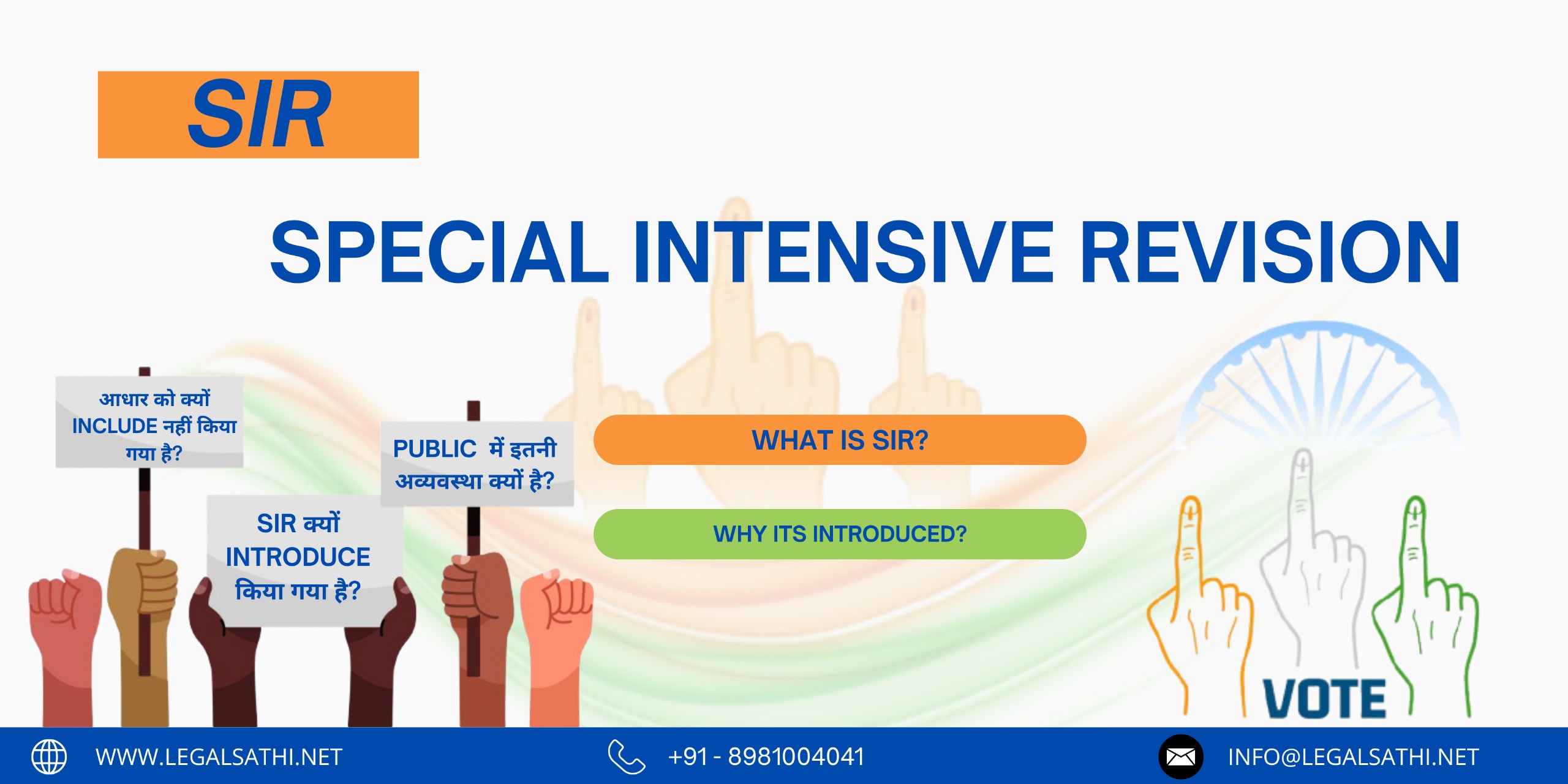
But, What Is Special Intensive Revision (SIR)?
It is the powerhouse process that ensures that our voter lists stay spot-on. the Special
Intensive Revision (SIR), is a house-to-house drive by the Election Commission of India
(ECI), to make sure our democratic foundation—the electoral roll—is rock-solid. This isn’t
just about adding new voters; it’s about making sure the list is a true reflection of the
community.
Booth Level Officers (BLOs) are our on-the-ground heroes, knocking on every door to
verify details, help new 18-year-olds register, and sadly, remove the names of those who have
passed away or moved.
Moreover, the ECI invites political parties to get involved by appointing Booth Level
Agents (BLAs) to assist, making it a truly collaborative effort. After a draft roll is published,
citizens get their chance to file claims or objections, giving us a direct say in the process. It’s
a fantastic example of a system built on transparency and public participation, culminating in
an updated, accurate voter list that’s ready for election day.
What’s Happening Now: SIR Rollout Across West Bengal
Although the CEO’s office has yet to issue a formal public announcement about the launch
of the revision, officials confirm that the groundwork is well underway.
On Monday, the Election Commission began releasing the updated version of this two
decade-old list, which is now publicly available on the website of the Chief Electoral
Officer (CEO) under the heading “2002 Special Intensive Revision (SIR) voter list.” The
current process utilizes this 2002 voter list as its foundational document, essential for
establishing a comprehensive and accurate electoral roll.
So far, voter rolls from more than 100 assembly constituencies across 11 districts have been
made available. This extensive reach indicates the significant progress the state is making in
this critical revision.
Booth Level Officers (BLOs) have been assigned to conduct house-to-house surveys as part
of this revision process. Their responsibilities include distributing SIR forms and verifying
voter information.
Not on the 2002 List? Here's What You Need to Know
Lack of Official Guidelines: Unlike Bihar, which has a specific list of 11 acceptable
documents—some of which are controversial. Items like Aadhaar, ration card, or voter card
were not included and some of those 11 documents don’t even exist in Bihar—such as the
National Register of Citizens (NRC) or a family register. While this has been a topic of
debate in Bihar, West Bengal’s election commission has not released an official list of
required documents. Booth Level Officers (BLOs) can accept a variety of documents. The
priority is to validate an individual’s eligibility through at least one credible form of
identification.
Exemptions for Existing Voters: Those whose names are already on the original 2002 SIR
voter list, and individuals listed as guardians or parents, will not be required to provide
additional paperwork. New voters and individuals migrating from other states must submit
forms with supporting documents to confirm their identity, lineage, and Indian citizenship.
Although this flexible approach aims for inclusivity, the absence of official guidelines may
create some ambiguity in the process.
Know more.
Maps, Mistakes & Missed Homes: On-the-Ground SIR Issues
Carrying out the Special Intensive Revision (SIR) process on the ground presents several
real-world challenges. One major issue is the lack of proper house numbering in rural
areas, especially in panchayats. To navigate this, BLOs create “Nazari Maps” — hand
drawn layouts used to assign identifiers and track each household within a booth.
Locked homes are another frequent problem. BLOs are instructed to leave the SIR form at
such houses, collect a contact number if possible, and return later when residents are more
likely to be available. This follow-up adds pressure to an already demanding task.
Verification becomes tougher for new voters and migrants, who aren’t listed in the original
2002 SIR voter list. They must submit valid documents proving citizenship and eligibility —
though West Bengal has not released a fixed list yet, BLOs have been told to be flexible.
To improve accuracy, the Election Commission encourages BLOs to consult local elders
who can identify families that have moved or members who are deceased. Additionally, the
BLO App helps officers submit data and link Aadhaar with voter IDs in real time.
Despite these tools, the process remains complex — requiring both official diligence and
strong community cooperation to ensure a clean and accurate voter list.
Conclusion: SIR 2025: A Step Toward Cleaner, Stronger Democracy
The Special Intensive Revision (SIR) process, despite its logistical challenges, plays a
critical role in strengthening the foundation of our democratic system. By conducting house
to-house surveys, verifying identities, and creating tools like Nazari Maps, the Election
Commission aims to clean up outdated records, remove invalid or duplicate entries, and
include genuine, eligible voters.
When done effectively, SIR can significantly improve the accuracy, transparency, and
integrity of the voter list — ensuring that every eligible citizen is counted and no fraudulent
entry goes unnoticed. Community involvement, along with digital tools like the BLO App,
further enhances the reliability of this exercise.
Ultimately, SIR is more than just a technical revision — it’s an important step toward fair and
inclusive elections. By reinforcing trust in the electoral process, SIR 2025 brings us closer to
a democracy that truly represents every voice.